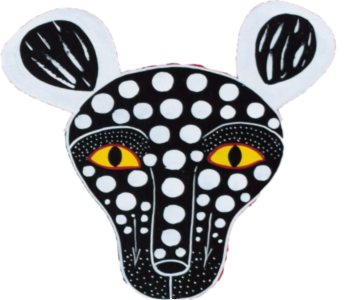
August 03, 2023
What you'll learn: This guide explores how Tanzanian artists depict lions, leopards, and cheetahs through the distinctive Tingatinga painting style—from its 1968 origins to contemporary interpretations. You'll discover the cultural significance of big cats in East African art, the unique techniques that bring these animals to life on canvas, and how purchasing these paintings supports Tanzanian artists directly.
Lions prowling across saturated blue backgrounds. Leopards wrapped around baobab trees in impossible patterns. Cheetahs mid-sprint, their spots rendered in colors nature never intended. This is how Tanzania's most iconic painting style captures Africa's big cats—not with photographic precision, but with exuberant color and imaginative composition that makes each painting instantly recognizable.
The Tingatinga style has depicted big cats since its founder, Edward Saidi Tingatinga, first picked up bicycle enamel and masonite in Dar es Salaam in 1968. The style originated when Tingatinga began painting with affordable materials like bicycle enamel on discarded ceiling boards, creating colorful paintings that depicted fantastic animals and birds. His death in 1972 could have ended the movement, but instead sparked a cooperative that continues his legacy today.
Africa's Big Cats: The Species That Inspire Tingatinga Art
Africa hosts three big cat species from the Panthera genus: lions, leopards, and cheetahs. Each occupies distinct ecological niches across the continent and brings unique characteristics that Tingatinga artists interpret through their vibrant, decorative style.
Lions: Africa's Social Apex Predator
Lions are classified as vulnerable on the IUCN Red List, with populations ranging from 22,000 to 25,000 individuals, though some conservation organizations estimate even lower numbers. Tanzania's Serengeti National Park and Ngorongoro Conservation Area remain strongholds for these social cats.
Male lions can weigh up to 181 kilograms, making them the largest cat species in Africa. Their distinctive manes—rendered in Tingatinga paintings with elaborate patterns and unexpected colors—serve multiple functions: intimidating rivals, attracting mates, and protecting the neck during fights.
In Tingatinga art, lions appear more frequently than any other subject. Their frontal portraits, with manes spread in full decorative glory, capture both the animal's physical presence and its symbolic associations with leadership and community strength in Tanzanian culture.
Leopards: The Adaptable Solitary Hunter
Leopards have the most extensive distribution range of any big cat, thriving in habitats from mountains and forests to grasslands and savannahs. This adaptability makes them particularly resonant for Tanzanian artists—leopards embody resourcefulness and strategic thinking.
Their distinctive rosette patterns—broken spots rather than the cheetah's solid circles—provide endless opportunities for artistic interpretation. Tingatinga painters transform these markings into decorative elements, sometimes realistic, often fantastical, with colors ranging from natural browns to electric blues and purples.
The famous Tingatinga composition of leopards draped over baobab branches reflects actual leopard behavior. These cats frequently rest in trees and cache kills in branches to protect them from scavengers. Artists emphasize the flowing lines of the leopard's body as it conforms to the tree's curves, creating natural visual harmony.
Cheetahs: Speed Captured in Enamel
Cheetahs are the fastest land animals on earth, reaching speeds up to 120 kilometers per hour. Tanzania's Serengeti hosts robust cheetah populations, and safari visitors frequently witness these animals in action.
Unlike lions and leopards, cheetahs cannot roar—they purr, chirp, and growl instead. Their build differs dramatically from other big cats: slender frames, long legs, and elongated spines that act like springs during sprints. These physical characteristics challenge Tingatinga artists working within a style that emphasizes flat, static composition.
Artists solve this challenge through horizontal compositions and flowing lines that suggest motion. The cheetah's spots often trail behind in graduated sizes or colors, creating the illusion of speed even in a two-dimensional painting. The East African cheetah, one of five subspecies worldwide, is distinguished by tear marks running from eye to eye across the lower lip—a detail Tingatinga artists faithfully include.
Beyond the Big Three: Other African Cats in Tingatinga Art
While lions, leopards, and cheetahs dominate Tingatinga wildlife paintings, artists occasionally depict other African cat species. Servals—medium-sized cats with extraordinarily long legs and large ears—appear in paintings, particularly those focusing on grassland scenes. Caracals, recognizable by their distinctive black ear tufts, make rare appearances.
These lesser-known species add variety to the Tingatinga catalog available at Tingatinga African Art, allowing collectors to find paintings beyond the most popular subjects.
Why Big Cats Dominate Tanzanian Painting
Walk through any Tingatinga studio in Dar es Salaam, and you'll see the same subjects appearing repeatedly: lions with ornate manes, leopards in acrobatic poses, cheetahs frozen in motion. This isn't coincidence or lack of creativity—it's a direct response to what visitors to Tanzania want to take home.
Many elements of the style relate to requirements of the tourist-oriented market, with subjects intended to appeal to Europeans and Americans, such as the big five and other wild fauna. Tanzania's wildlife draws hundreds of thousands of safari visitors annually, and they want art that captures what they've experienced. Big cats represent the apex of that experience.
But there's deeper cultural significance beyond tourism economics. In numerous African cultures, lions symbolize strength, courage, and leadership, appearing in many myths and tales as protectors and as spirits with supernatural powers. Leopards carry associations with wisdom and strategy in West African traditions, while cheetahs represent speed and grace throughout East Africa.
When Tingatinga artists paint these animals, they're tapping into centuries of symbolism while creating something distinctly modern and Tanzanian.
The Tingatinga Technique: Creating Big Cats in Bold Color
Traditional Tingatinga paintings follow specific technical approaches that distinguish them from other African art styles. Understanding these methods helps you appreciate what you're looking at—and what you're purchasing.
Materials and Canvas Preparation
Tingatinga employed low-cost materials such as masonite and bicycle paint, attracting attention for their colorful, both naïve and surrealistic style. Contemporary artists have evolved these choices. Most now work on stretched canvas rather than masonite, though many maintain the tradition of using enamel paints for their distinctive glossy finish and saturated colors.
The painting process typically begins with a base coat in a single vibrant color—often deep blue, rich green, or warm ochre. This background establishes the entire painting's mood. A blue background might suggest twilight or the cooling shadows of acacia trees. Green evokes the lush vegetation of Tanzania's highlands.
Building the Big Cat
Tingatinga artists work quickly and confidently, rarely sketching beforehand. They paint the animal's silhouette directly onto the prepared background, building up the form with successive layers of enamel. The characteristic "naïve" quality comes from this directness—no preliminary drawings, no excessive corrections, just bold strokes that capture the animal's essence.
Lions receive particular attention to their manes, which artists render in elaborate patterns—sometimes naturalistic, sometimes purely decorative with geometric motifs or contrasting colors. A lion's mane might be traditional golden-brown, or it might be purple, green, or multi-colored. This creative freedom with color is fundamental to the style.
Leopards and cheetahs present different challenges. Their spots become design elements that artists manipulate for visual effect. Animals are painted bright colors and may contain natural or unnatural patterns, with outlines drawn around the animal. You might see a leopard with perfectly circular rosettes in alternating colors, or a cheetah with spots that fade into the background in gradient patterns.
Composition and Space
The genre is characterized by simplicity, a lack of perspective, and vivid, saturated colors. This "lack of perspective" is deliberate, not a deficiency. Tingatinga paintings embrace two-dimensional composition, with big cats often filling the entire canvas edge-to-edge. This creates visual impact—the animal dominates your attention immediately.
Multiple animals might appear in impossible spatial relationships. A lion in the foreground might be the same size as an elephant in the "background." Trees and animals intertwine without regard for realistic spatial depth. This approach, sometimes called horror vacui (fear of empty space), ensures every centimeter of canvas contributes to the overall visual experience.
From Edward Tingatinga to Contemporary Masters
The evolution of big cat paintings within the Tingatinga tradition reflects broader changes in Tanzanian art and society.
The Founder's Vision (1968-1972)
Edward Saidi Tingatinga's original paintings were simple and direct, lacking nuance and detail but bursting with exuberant life, whimsy and color. His big cats had a folk art quality—recognizably lions or leopards but filtered through his unique vision. These early works command significant collector interest today due to their scarcity.
Edward's years of painting were only four, yet his paintings captured the attention of Tanzania's National Arts Company and he painted wholesale for them. His tragic death at age 40 could have ended everything, but his apprentices—mostly family members—continued his techniques.
First Generation: Faithful Reproduction
The first generation of artists from the Tingatinga school basically reproduced the works of the school's founder. This period, roughly the 1970s and 1980s, saw artists like Simon Mpata (Edward's brother-in-law) creating works that closely mimicked the original style. Big cats appeared in similar poses and compositions, maintaining the aesthetic that had proven commercially successful.
This wasn't creative stagnation—it was cultural preservation. The artists were establishing and standardizing the Tingatinga vocabulary, ensuring the style's continuation and recognition.
Contemporary Evolution
In the 1990s new trends emerged within the Tingatinga style, introducing new subjects related to the new urban and multi-ethnic society of Dar es Salaam, together with occasional technical novelties such as the use of perspective. Big cat paintings evolved too, though more subtly than urban scene paintings.
Contemporary Tingatinga artists working through cooperatives in Dar es Salaam and Zanzibar bring individual interpretations to traditional subjects. Some incorporate more realistic anatomy while maintaining the style's signature flat composition. Others push toward increasingly abstract representations, with big cats dissolving into pattern and color.
The technical quality has generally improved. Access to better materials—quality canvas, refined enamel paints, proper brushes—allows for finer detail and more durable paintings. Yet the essential character remains: bold, colorful, immediately recognizable as Tingatinga.
Popular Big Cat Compositions Available at Tingatinga African Art
Tingatinga African Art offers over 500 original paintings, with big cats representing some of the most sought-after subjects. Certain compositions appear repeatedly because they resonate with both artists and buyers.
The Lion King: Frontal Portrait
Lions facing forward, mane spread in full glory, remain the most popular single subject. These portraits emphasize majesty and authority—the lion's traditional symbolic associations. Artists often surround the lion's head with elaborate mane patterns that become almost mandala-like in their complexity.
Interior designers note that these bold, symmetrical compositions work particularly well as focal points above furniture or in entryways. The lion's direct gaze creates presence in a room. Browse the wildlife paintings collection to see multiple interpretations of this classic subject.
Leopard in the Baobab
Famous Tingatinga paintings include the Leopard and Peacock on the Baobab Tree. This composition shows a leopard draped over baobab branches, sometimes with its characteristic prey stored in the tree. The curved lines of the leopard's body complement the baobab's distinctive shape, creating natural visual flow.
This subject has deep roots in East African reality—leopards frequently rest in trees and cache kills in branches. The Tingatinga interpretation adds decorative elements: the tree's bark becomes a pattern opportunity, the surrounding space fills with birds or smaller wildlife.
Cheetah in Motion
Capturing a cheetah's speed presents unique challenges in a style that emphasizes flat, static composition. Tingatinga artists solve this through extended, horizontal formats and by suggesting motion through the animal's elongated body and flowing lines. The cheetah's spots often trail behind in graduated sizes or colors, implying movement.
These paintings suit long, narrow wall spaces—above a sofa, along a hallway, or in a dining room. The collection at Tingatinga African Art includes multiple cheetah compositions in various sizes.
Multiple Big Cats in Landscape
More complex compositions show multiple big cats in savannah settings, surrounded by acacia trees, other wildlife, and decorative vegetation. These narrative paintings tell stories: a lioness hunting, leopards interacting, a cheetah family. They represent the Tingatinga style's maximum complexity, requiring more artistic skill and time to execute.
How Tingatinga Big Cat Paintings Are Created Today
At Tingatinga African Art, artists work in a collaborative studio environment in Dar es Salaam. The creative process balances individual artistic vision with the cooperative's quality standards and the style's traditional techniques.
From Blank Canvas to Completed Painting
Each painting begins with the artist's vision of composition. While big cats remain popular subjects, each artist brings their personal approach to the work. Some prefer bold, high-contrast color schemes. Others work with more harmonious, graduated tones. These individual preferences make each painting unique even when depicting similar subjects.
The base color goes down first, covering the canvas completely. Artists typically apply multiple coats to achieve the desired depth and smoothness. Once dry, they begin painting the primary subject—the big cat itself—working from largest shapes to smallest details.
Background elements come next: trees, birds, smaller animals, decorative patterns. Tingatinga paintings often build up complexity gradually, with artists adding layers of detail as they see opportunities within the composition. The process is more organic than rigidly planned.
Final touches include outlining. Outlines are drawn around the animal, typically in black or dark brown, which makes the forms pop against the background and reinforces the style's graphic quality.
Quality Control and Artist Development
Working within a cooperative structure means paintings undergo review before being offered for sale through Tingatinga African Art. Experienced artists assess technical execution: paint coverage, color harmony, compositional balance, and adherence to the Tingatinga aesthetic. This quality control maintains the cooperative's reputation while helping developing artists improve their craft.
Artists learn through apprenticeship and observation, much as Edward Tingatinga taught his original students. Newer artists begin with simpler compositions before progressing to more complex multi-animal scenes. This traditional knowledge transfer preserves techniques while allowing gradual innovation.
Caring for Your Tingatinga Big Cat Painting
Enamel paintings on canvas require specific care to maintain their vibrant appearance over time. These guidelines help protect your purchase.
Display Considerations
Tingatinga paintings use enamel paints that hold their color exceptionally well, but prolonged direct sunlight can eventually cause fading. Position your painting where it receives indirect natural light rather than hours of direct sun exposure daily. This applies particularly to windows with western exposure.
The glossy enamel surface can show glare under harsh artificial lighting. Experiment with lighting angles when hanging your painting, or use diffused lighting sources rather than direct spotlights.
Cleaning and Maintenance
The enamel surface resists dust accumulation better than absorbent paint finishes. Light dusting with a soft, dry cloth maintains appearance. For more substantial cleaning, slightly dampened (not wet) microfiber cloths work effectively. Always test on a small, inconspicuous area first.
Avoid commercial cleaning products, alcohol, or solvents, which can damage the enamel finish. Simple water dampening is sufficient for most cleaning needs.
Environmental Factors
Canvas paintings expand and contract slightly with humidity changes. Maintain relatively stable humidity levels—extreme swings can eventually stress the canvas and cause cracking in the paint film. Standard household climate control provides adequate protection.
Temperature stability matters too. Avoid hanging paintings near heat sources like radiators or fireplaces, or in locations with temperature extremes.
Selecting a Big Cat Painting: What to Consider
Choosing a Tingatinga painting involves balancing aesthetic preferences, practical considerations, and personal connection with the artwork.
Size and Space Planning
Tingatinga paintings are available in multiple standard sizes, from compact 50cm x 50cm squares to substantial 140cm x 110cm rectangular canvases. The traditional square format works well in many contexts—above beds, in hallways, grouped with other art pieces.
Calculate your available wall space before selecting size. A useful approach: multiply wall dimensions by 0.70 to determine the maximum painting width that will look proportionally appropriate. For example, a wall 120cm wide can accommodate a painting up to about 84cm wide without overwhelming the space.
Larger paintings create immediate focal points and work well in open-plan living areas or above substantial furniture pieces. Smaller paintings suit intimate spaces like bedrooms, home offices, or create impact when grouped in multiples.
Color Coordination
Tingatinga paintings use bold, saturated colors that make strong statements. Consider your existing décor's color palette when selecting. The painting doesn't need to match perfectly—in fact, a contrasting color scheme often creates more interest—but extreme clashes can feel jarring.
Many buyers find that the painting's background color provides the key coordination point. A painting with a rich blue background complements spaces with blue accents in textiles, while green backgrounds harmonize with natural wood tones and plants.
Remember that Tingatinga's vibrant colors tend to energize spaces. They work particularly well in rooms where you want visual stimulation—living rooms, creative workspaces, dining areas—rather than spaces designed for calm, like bedrooms.
Artistic Preference
Browse multiple artists' work to discover whose style resonates with you. Some artists create more realistic big cat anatomy within the Tingatinga framework. Others push toward maximum decorative abstraction. Some prefer busy, complex compositions filled with detail. Others embrace more minimal approaches with significant empty space.
The Tingatinga African Art collection showcases work from multiple artists, allowing direct comparison. Each painting reflects an individual artist's hand, even when depicting similar subjects. These subtle differences—how one artist renders a lion's mane versus another's approach, color palette preferences, compositional choices—make each painting a unique work.
The Make An Offer Approach
Tingatinga African Art offers a Make An Offer feature that provides pricing flexibility. This transparent approach acknowledges that art value includes subjective elements—how much a particular painting speaks to you personally. Browse the collection, identify paintings that resonate, and propose a fair offer based on your budget and the artwork's appeal.
Big Cats Beyond Decoration: Cultural Connection
Purchasing a Tingatinga big cat painting extends beyond acquiring wall décor. You're participating in an artistic tradition with specific cultural and economic impacts.
Supporting Tanzanian Artists
The cooperative works as a social enterprise dedicated to improving the lives of artists and their families by empowering them to break the cycle of poverty through access to education, healthcare, financial inclusion, and greater prosperity. Artists working through established cooperatives receive fair compensation for their work, with direct payment structures that avoid exploitative middlemen.
This matters in Tanzania's economic context. Skilled artistic work provides income stability that supports families and communities. When you purchase a painting from Tingatinga African Art, you're enabling an artist to continue their craft rather than seeking other employment.
Preserving Traditional Techniques
The Tingatinga style emerged from specific historical circumstances—Edward Tingatinga's innovation combined with East Africa's tourism boom. That makes it relatively young as artistic traditions go, but no less worthy of preservation. Each new generation of artists who learns these techniques ensures the style's continuation.
With over 50 years of experience in the industry, cooperatives serve as the go-to source for customers seeking pieces tailored to their specific tastes and needs. This longevity reflects successful cultural preservation alongside commercial viability.
Authentic versus Imitation Work
Tingatinga's style was so popular that it started a wide movement of imitators and followers. Today, Tingatinga-inspired paintings are produced throughout East Africa and even outside the region. Quality and authenticity vary considerably.
Working with established cooperatives in Dar es Salaam provides authenticity assurance. These artists maintain direct lineage to the style's origins through apprenticeship and membership in recognized organizations. The paintings reflect genuine participation in the Tingatinga tradition rather than superficial imitation.
Big Cats in Contemporary Tanzanian Culture
The Tingatinga style's influence extends beyond paintings sold to visitors and collectors. It has become embedded in Tanzanian visual culture.
The Tinga Tinga Tales Animation
The BBC commissioned an educational cartoon series in Kenya called Tinga Tinga Tales, featuring animated animals telling stories for kids based on traditional African tales, with 52 episodes made. The show introduced children worldwide to East African folklore through the Tingatinga aesthetic.
This international exposure raised the style's profile significantly. The distinctive visual approach—bold colors, simplified forms, decorative patterns—became recognized globally as representative of East African art. Big cats feature prominently throughout the series, reinforcing their central role in the tradition.
Souvenirs and Applied Art
Today, souvenir shops in Tanzania offer Tingatinga-style animals on home décor items like coat racks, mugs, ashtrays, compact mirrors, wallets, and coasters. This commercialization raises debates about artistic integrity versus economic opportunity.
Original paintings remain the authentic expression of the art form, but applied products extend the aesthetic's reach and provide additional artist income. The challenge lies in maintaining quality standards across different media—ensuring that a Tingatinga-style mug or textile reflects the genuine spirit rather than cheap copying.
Conservation Awareness
Contemporary Tanzanian artists increasingly use big cat paintings to raise conservation awareness. Tanzania faces ongoing challenges with human-wildlife conflict, habitat loss, and poaching pressure on iconic species. Artists collaborate with conservation organizations, creating work that celebrates big cats while drawing attention to their threatened status.
These collaborations demonstrate how traditional art forms evolve to address modern concerns. A painting of a leopard becomes not just decoration or cultural expression, but advocacy—a reminder that these animals need protection in their natural habitats.
Technical Deep Dive: The Enamel Paint Difference
The choice of enamel paint fundamentally shapes Tingatinga's visual character. Understanding these technical properties helps you appreciate what distinguishes these paintings from other African art styles.
Paint Properties and Handling
Bicycle enamel, the original Tingatinga medium, was formulated for outdoor metal surfaces—designed to withstand weather, resist chipping, and maintain color. These industrial-grade properties translate to art with advantages and constraints.
Enamel paints have slower drying times than acrylics but faster than traditional oils. This creates a specific working window—long enough for the artist to blend colors and work the surface, but requiring relatively quick decision-making. The technique demands confidence and practiced hand.
The glossy finish occurs naturally as the enamel cures. This sheen distinguishes Tingatinga from matte-finish African art styles and contributes to the paintings' visual vibrancy. Colors appear more saturated and luminous due to the reflective surface.
Layering and Coverage
Enamel's opacity allows artists to paint light colors over dark backgrounds effectively—a technical advantage that enables the style's characteristic bright-on-dark compositions. A white or yellow bird can sit cleanly against a deep blue sky without the underlying color showing through.
This opacity also permits correction and overpainting more effectively than transparent media. If an artist wants to adjust a lion's mane shape or reposition an element, they can paint over the section and start fresh. This flexibility supports the spontaneous, non-preliminary-sketch approach typical of Tingatinga work.
Durability Considerations
Enamel's industrial heritage means excellent long-term durability when properly applied. The paint film remains flexible enough to accommodate canvas movement without excessive cracking. Color stability exceeds many artist-grade paints—your big cat painting should look essentially identical decades from now if protected from direct sunlight.
The main vulnerability comes from physical impact. While the cured enamel resists scratching better than soft paints, sharp impacts can crack or chip the surface. Standard careful handling during moving or cleaning prevents damage.
Big Cat Symbolism in Tanzanian Context
While big cats carry significance across African cultures, Tanzanian perspectives reflect specific local traditions and contemporary experiences.
Lions: Authority and Community
In Tanzanian ethnic traditions, lions often represent communal leadership rather than individual power. The connection emphasizes responsibility—a leader must protect the community like a lion defends its pride. This differs from Western interpretations that tend to focus on individual dominance.
Maasai traditions, particularly relevant given their presence in northern Tanzania's Serengeti region, include complex relationships with lions. Historically, young Maasai warriors proved themselves through lion hunting, though this practice has evolved toward conservation-focused approaches. The lion remains a symbol of courage and the transition to adulthood.
Leopards: Adaptability and Wisdom
Leopards' solitary nature and remarkable adaptability to various habitats—from mountains to savannahs—make them symbols of resourcefulness in Tanzanian folklore. Unlike the gregarious lion, the leopard succeeds through intelligence and flexibility rather than group strength.
In paintings available at Tingatinga African Art, leopards often appear in complex poses—draped over branches, peering from foliage, contorted in impossible positions. This reflects both the animal's physical agility and its symbolic association with finding unconventional solutions.
Cheetahs: Speed and Precision
Tanzania's Serengeti hosts some of the world's largest remaining cheetah populations, making these animals particularly resonant for Tanzanian artists. The cheetah's hunting strategy—explosive speed applied with precise timing—inspires respect for focused effort and seizing opportunities.
In Tingatinga compositions, cheetahs rarely appear stationary. Artists emphasize elongation and flowing lines to suggest motion even in static paintings. This artistic challenge—representing speed in a non-realistic style—pushes painters toward creative solutions.
Practical Guide: Commissioning Custom Big Cat Paintings
While browsing existing collections at Tingatinga African Art provides many options, commissioning a custom painting allows specific personalization.
The Commission Process
Start by identifying which big cat species resonates with you and why. Do you want a lion because it represents family leadership? A leopard for its association with strategy? A cheetah for its connection to speed and timing? Understanding your motivation helps communicate with the artist.
Consider composition preferences: single animal portrait, multiple animals in landscape, or narrative scene with story elements. Think about color preferences—do you want traditional earth tones and natural colors, or are you drawn to Tingatinga's more adventurous color combinations?
Size decisions should happen early, based on your available display space. Remember that Tingatinga's bold style can handle larger sizes without becoming overwhelming—the flat composition and decorative approach scale up effectively.
Communicating Your Vision
Most cooperatives facilitate commission discussions through their websites. Describe your preferences clearly: subject (which big cat), approximate size, color preferences, compositional ideas. Providing reference images of Tingatinga paintings you admire helps artists understand your aesthetic direction.
Be open to artist input. Experienced Tingatinga painters understand what compositions work well within the style's constraints and can suggest modifications that improve the final result. The collaboration between your vision and their expertise typically yields the best outcomes.
Timeline and Expectations
Custom paintings require more time than purchasing existing work from the collection. The artist needs time to develop the composition, execute the painting, and allow proper drying before shipping.
Be patient with the creative process. While Tingatinga paintings appear spontaneous, achieving that effortless quality requires skill and thought. Rushing the artist rarely improves the result.
The Global Reach: Tingatinga Big Cats Worldwide
Tingatinga paintings have found homes across six continents, with particularly strong followings in specific regions.
Geographic Markets
The paintings are popular in Japan, Sweden, Denmark and Switzerland as well as the USA. Each market appreciates different aspects. Japanese collectors often favor the decorative, pattern-rich approach. Scandinavian buyers appreciate the bold, graphic quality that complements minimalist interiors. American collectors frequently connect with the wildlife subject matter and folk art aesthetic.
This geographic diversity reflects the style's versatility. Tingatinga paintings work across different interior design traditions—from contemporary to traditional, minimalist to maximalist—because their bold, unambiguous visual language translates across contexts.
Shipping and Logistics
Tingatinga African Art offers worldwide shipping through established partners like DHL and Aramex. The cooperative maintains a 100% delivery success record to date, with tracking and insurance protecting each shipment.
Canvas paintings roll for shipping, which reduces costs and damage risks compared to framed work. Once received, you can have the painting stretched and framed locally to your preferences. This approach also allows customization—choosing frame styles that complement your specific interior rather than accepting predetermined framing.
Exhibition and Recognition
Tingatinga paintings appear in museum collections and exhibitions internationally. While the style sometimes faces dismissal as "airport art" due to its tourist market origins, serious collectors and institutions increasingly recognize its artistic merit and cultural significance.
The National Museum of Tanzania features Tingatinga work, validating the style's importance to Tanzanian cultural heritage. International exhibitions have showcased Tingatinga paintings alongside other African art forms, situating the style within broader artistic contexts.
Understanding Painting Value and Pricing
While these paintings should be selected primarily as decorative pieces and cultural artifacts that enhance your home, understanding value dynamics helps inform purchasing decisions.
What Affects Painting Price
Several factors influence a Tingatinga painting's price at Tingatinga African Art. Size is most obvious—larger canvases require more time and materials. Complexity matters too: a simple single-animal portrait takes less time than an elaborate multi-animal landscape scene.
Artist experience affects value. Work by recognized, established artists within the cooperative commands higher prices than paintings by newer artists still developing their skills. Both offer authentic Tingatinga work, but the level of technical mastery differs.
Subject rarity can influence value. Big cats remain consistently popular, but paintings featuring less common animals or innovative compositions might appeal to collectors seeking distinctive pieces.
Pricing Transparency
The Make An Offer feature provides unusual transparency compared to traditional art markets. You can see the gallery's asking price and propose what you consider fair value. This openness acknowledges that art pricing includes subjective elements—how much a particular painting resonates with you personally.
Reasonable offers based on the painting's size, complexity, and your budget typically receive acceptance. The approach makes Tingatinga art accessible to broader audiences rather than restricting it to collectors with unlimited budgets.
Long-Term Considerations as Heirloom Pieces
Purchase Tingatinga paintings because they bring you joy and enhance your living space, creating a timeless addition to your home that can be passed down through generations. These are decorative pieces that connect you with Tanzanian culture and support living artists.
Well-maintained Tingatinga paintings by recognized artists from established cooperatives serve as heirloom pieces that maintain their beauty and cultural significance over time. The style's growing international recognition ensures these works remain appreciated by future generations who value authentic craftsmanship and cultural heritage.
Where Tingatinga Big Cat Paintings Work Best
Interior designers and homeowners have discovered these paintings' versatility across various spaces and design styles.
Living and Gathering Spaces
Tingatinga paintings' bold, energetic qualities make them natural choices for social spaces. Living rooms benefit from the visual interest and conversation-starting power of a dramatic big cat painting. The vibrant colors energize the space and create a focal point that anchors the room's design.
Dining areas also work well. The paintings' decorative quality and cultural richness provide visual interest during meals without being overly distracting. A well-chosen painting can set the tone for the entire space—welcoming, worldly, appreciative of craftsmanship.
Office and Professional Settings
The symbolic associations of big cats—leadership, strategy, courage, focus—make these paintings appropriate for professional environments. A lion painting in an office can convey authority without the aggressive overtones of more realistic wildlife art. The Tingatinga style's approachability prevents the office from feeling intimidating.
Waiting rooms and reception areas benefit from Tingatinga's engaging visual quality. The paintings give visitors something interesting to look at while subtly communicating that the organization values culture and craftsmanship.
Personal Spaces
Bedrooms can accommodate Tingatinga big cat paintings, though consider color and intensity carefully. The bold colors that energize a living room might feel too stimulating in a space designed for rest. Paintings with more muted palettes or substantial blue backgrounds often work better in sleeping spaces.
Home offices and creative workspaces suit Tingatinga paintings well. The connection to creativity and craftsmanship can inspire your own work, while the visual interest prevents the space from feeling sterile.
Complementary Design Elements
Tingatinga paintings pair effectively with natural materials—wood furniture, woven textiles, stone or ceramic accessories. These elements ground the paintings' vibrant colors in organic textures.
The style also works surprisingly well with modern, minimalist interiors. The flat, graphic quality of Tingatinga complements clean lines and simple forms, while the bold color provides necessary visual warmth in spaces that might otherwise feel cold.
Conclusion: More Than Wall Décor
Selecting a Tingatinga big cat painting connects you with artistic tradition that began with Edward Saidi Tingatinga's resourceful innovation in 1968 and continues through cooperative artists in Dar es Salaam today. These paintings offer more than colorful wall décor—they represent cultural preservation, fair-trade practice, and the ongoing vitality of Tanzanian artistic expression.
Whether you're drawn to the symbolic power of lions, the mysterious elegance of leopards, or the dynamic energy of cheetahs, Tingatinga paintings interpret these animals through a distinctively Tanzanian lens. The bold colors, flat composition, and decorative approach create instantly recognizable work that brings energy and character to any space.
Browse the full collection at Tingatinga African Art to discover the range of big cat paintings available. With over 500 original paintings to choose from, worldwide shipping through trusted partners like DHL